
Wave Field Synthesis (WFS) is a spatial audio rendering technique that places virtual sound sources in real space. With a custom-built, 372-channel array, Bobby can place sound sources accurately in physical space in front of the speakers—in short, he makes sound holograms or "holophones."
In 2017, Bobby became the first sound designer to use overhead WFS in a live theater context for Andrew Schneider’s AFTER, which premiered at EMPAC. Suspended above the audience, the system allowed sounds to move dynamically throughout the theater, localizing precise acoustic events right in front of specific seats. Audiences experienced sound moving in physically impossible ways—whispering directly in their ears or passing through their bodies.
Following several artist residencies at EMPAC, Bobby set out to fabricate his own custom hardware. In 2018, he built a 372-loudspeaker Wave Field Synthesis array based on this research, creating one of the most extensive WFS systems in the world. The array has 372 individually addressable channels and uses IRCAM's Spat 5 suite within Max/MSP.
This research moved to UC San Diego in 2020, where Bobby expanded his development within a lab space at the Jacobs School of Engineering and the Department of Theatre & Dance, where he is on faculty. Innovation has since focused on scaling the technology; in 2022, he fabricated a modular 256-channel array for rapid R&D, and is currently designing a highly portable, cost-effective WFS system aimed at making spatial arrays accessible to independent artists and regional venues.
The physics underlying WFS allows for an astonishing level of acoustic precision. Because the synthesis is mathematically correct, the human ear cannot distinguish a synthesized virtual sound source from a "real" physical acoustic wave at frequencies below the upper spatial limit of the system. The current array delivers completely undistorted wave fields up to a spatial aliasing frequency of 3.3 kHz, while serving as an experimental bed for testing the perceptual boundaries of spatialization between 700 Hz and 6 kHz. Newer designs aim for an even higher spatial aliasing frequency.
Below is a time-lapse of the original 2018 fabrication process. Pictured is one of the 12 modular WFS enclosures, each housing over 30 tightly spaced drivers within a six-foot frame.
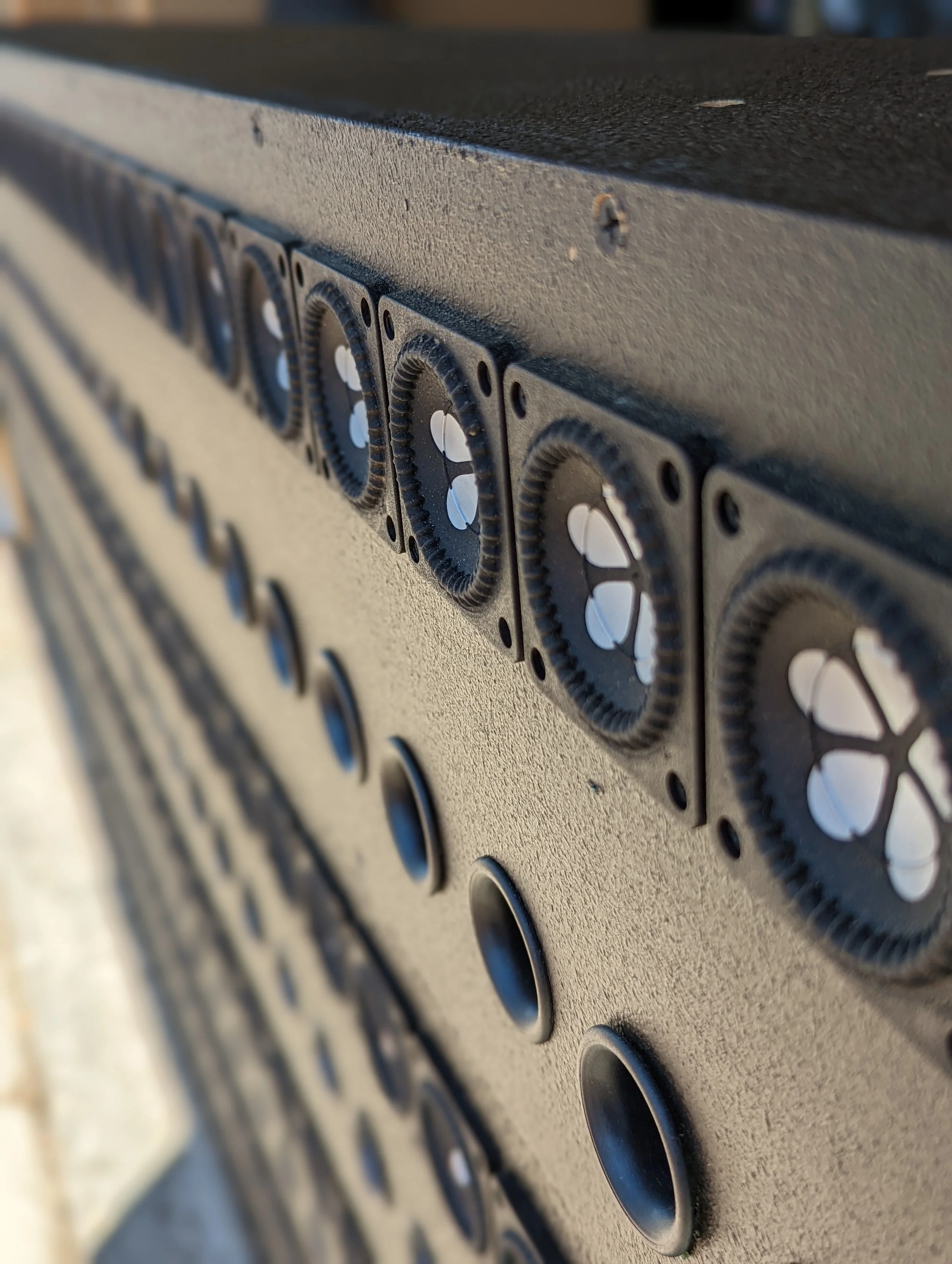
The 2018 WFS arrays are modular and tour-able. They travel in custom road cases and are often on tour with Andrew Schneider’s installation NOWISWHENWEARE, which Bobby co-sound designed. They have also been used for various installations and works for theatre and dance. Below are photos of various WFS configurations.

Horizontal WFS array at MASS MoCA

Overhead WFS demonstration at EMPAC, July 2019

Overhead WFS arrays for AFTER
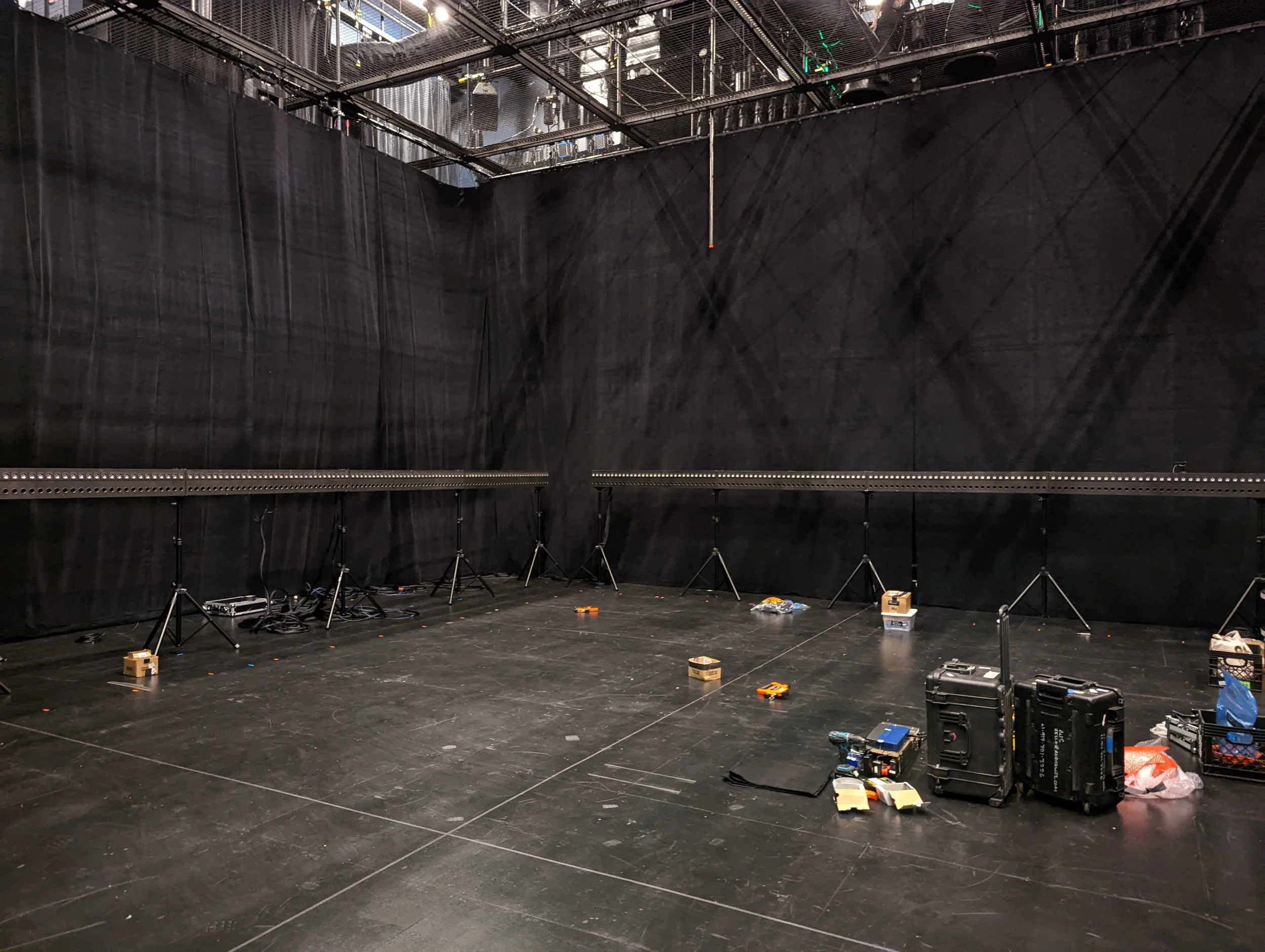
400+ channels of WFS wrap the sides of the room in Andrew Schneider’s NOWISWHENWEARE

Overhead WFS arrays for AFTER

The 2018 arrays in custom road cases
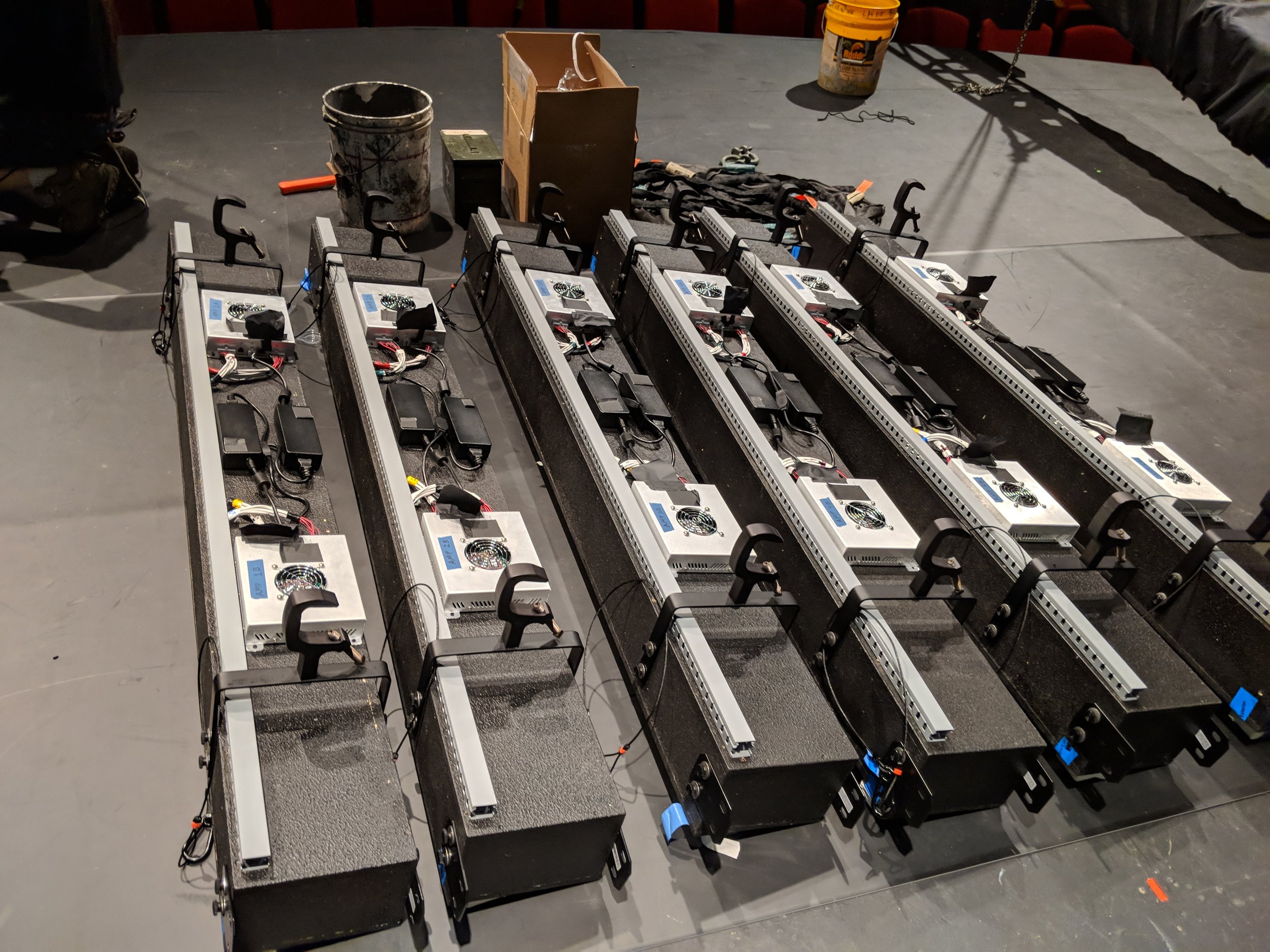
Modular units

Overhead WFS arrays in a mid-sized theatre